Oak trees make up a large part of our native tree canopy and ecosystems in Illinois and the Midwest. Oaks are also some of the longest-lived trees in our environment, sometimes surviving for half a millennium. With their longevity, oaks also become an ecosystem upon themselves, serving as a host and food source for various animals, insects, and microbes. However, not all these organisms are benign. In this post, we’ll outline some common leaf pathogens that may be causing the leaves on our oak tree to look scorched, distorted, or browning.
Leaf Scorching: A Common Plight
Leaf scorching is a prevalent issue among oak trees, particularly in the latter months of summer. The fresh leaves that emerge in the spring undergo a full life cycle, eventually becoming hosts for various pathogens as the season progresses. Scorching often appears as browning on the leaves, initiating either at the outer edges, the petiole (stem) of the leaf, or within the leaf’s veins.
Environmental factors such as temperature, drought, humidity, and the heat island effect caused by pavement can contribute to leaf scorching. Herbicide application can lead to leaf cupping or distortion. Additionally, bacterial or fungal infections can also cause leaf scorching.
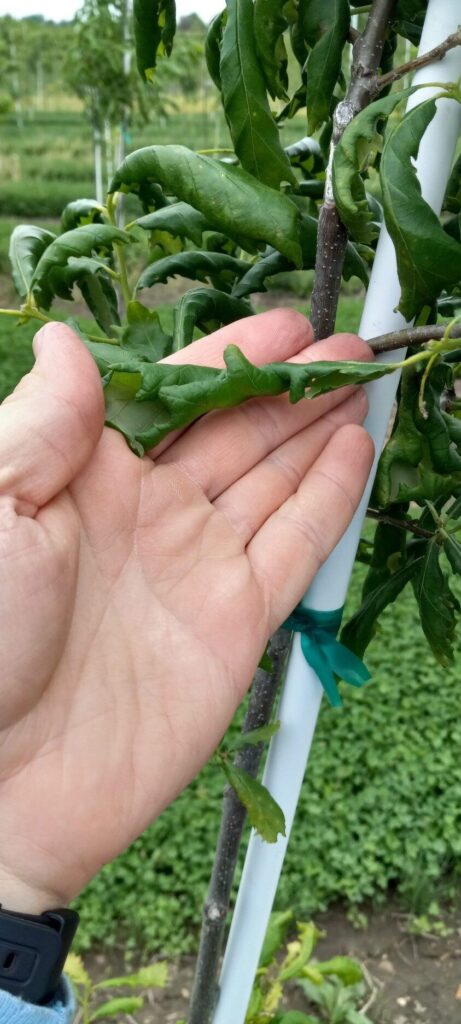
(Symptoms of herbicide leaf distortion on nursery-grown oak)
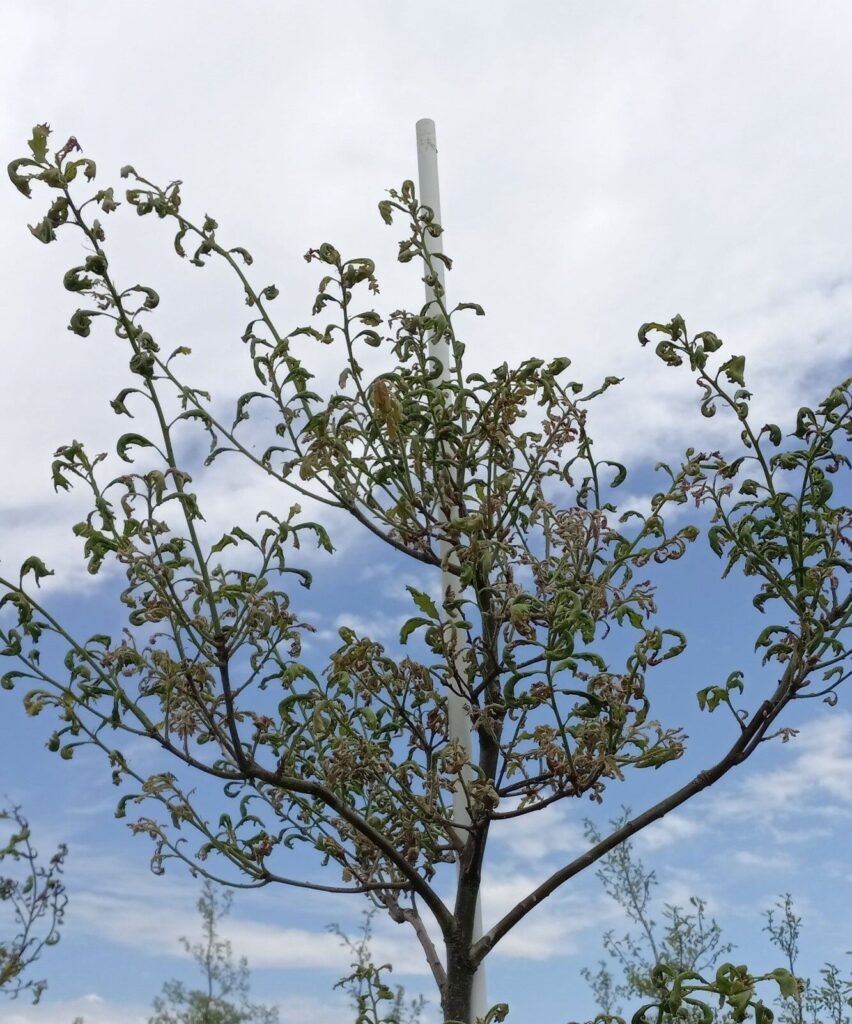
(More herbicide drift damage causing severe cupping and scorching on this nursery-grown red oak)
The Threat of Oak Wilt
Oak wilt is a recently identified fungal pathogen in our region that can bring about rapid and drastic declines in urban trees. This disease is characterized by the sudden, consistent browning of leaves from their tips, typically affecting one branch or limb at a time. Streaking beneath the bark of infected branches is a telltale sign. Oak wilt is spread by small insects and transmitted to new tree wounds, underscoring the importance of avoiding oak pruning during the growing season.
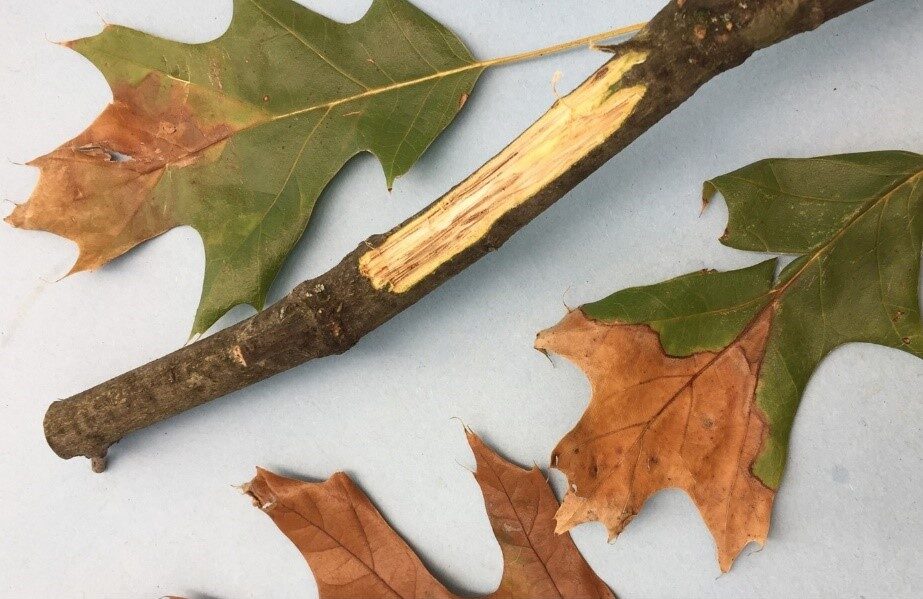
When severe infection sets in, treatment options for oak wilt may be limited. However, a systemic application of fungicide can help prevent infection. The disease can also spread through underground root grafts between trees, making air spade root pruning a viable option to prevent healthy trees from succumbing to infection. In such cases, a laboratory test is essential to confirm or rule out the presence of oak wilt.
Bacterial Leaf Scorch: A Stealthy Intruder
Bacterial leaf scorch is caused by Xyella fastidiosa, a bacterium that usually initiates scorching from the leaf edges and progresses inwards. Unlike fungal pathogens like oak wilt, bacterial leaf scorch does not result in streaking within vascular tissues. Diagnosis can be challenging, often necessitating laboratory testing for confirmation. To manage oak leaf scorch, good cultural practices, including proper pruning to maintain canopy health, mulching, and appropriate watering during drought periods, are essential. As with oak wilt, a laboratory test is necessary to confirm the presence of the bacterium.
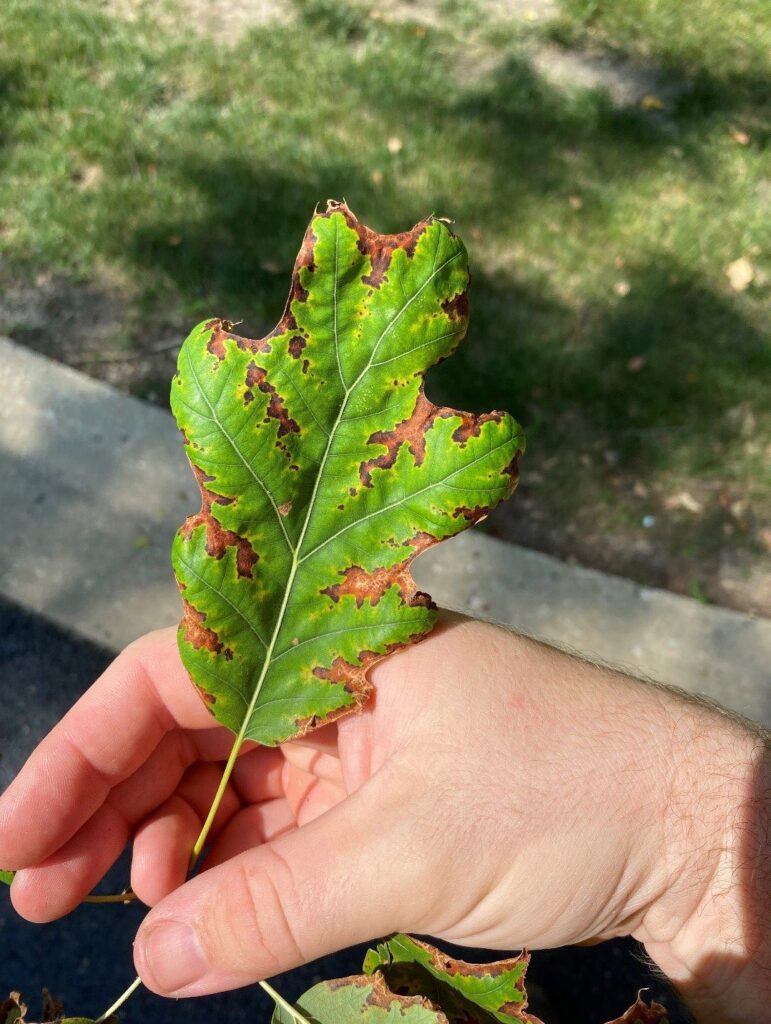
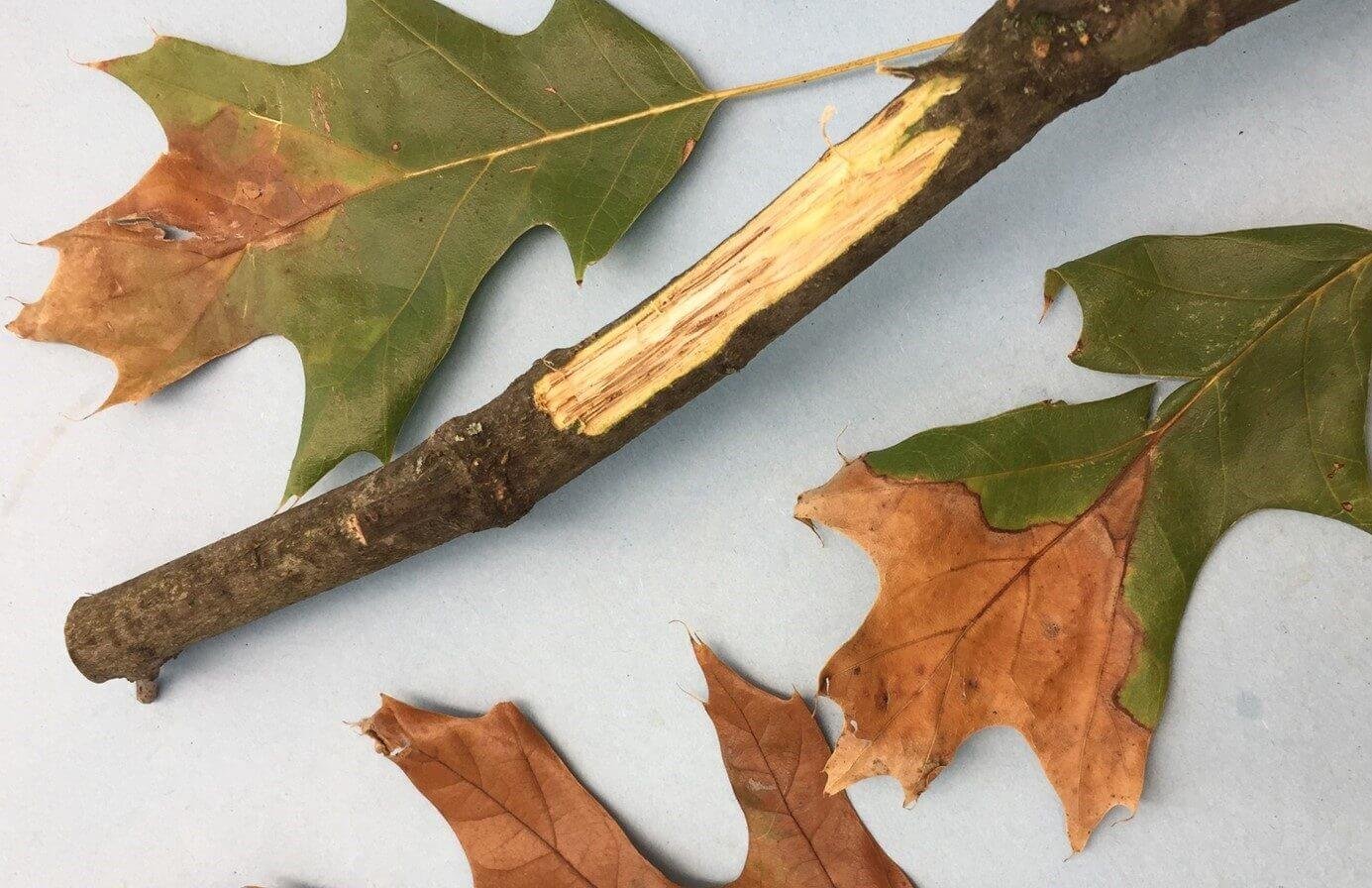
(Possible leaf scorch symptoms, beginning from the margins of the leaf and moving inwards)
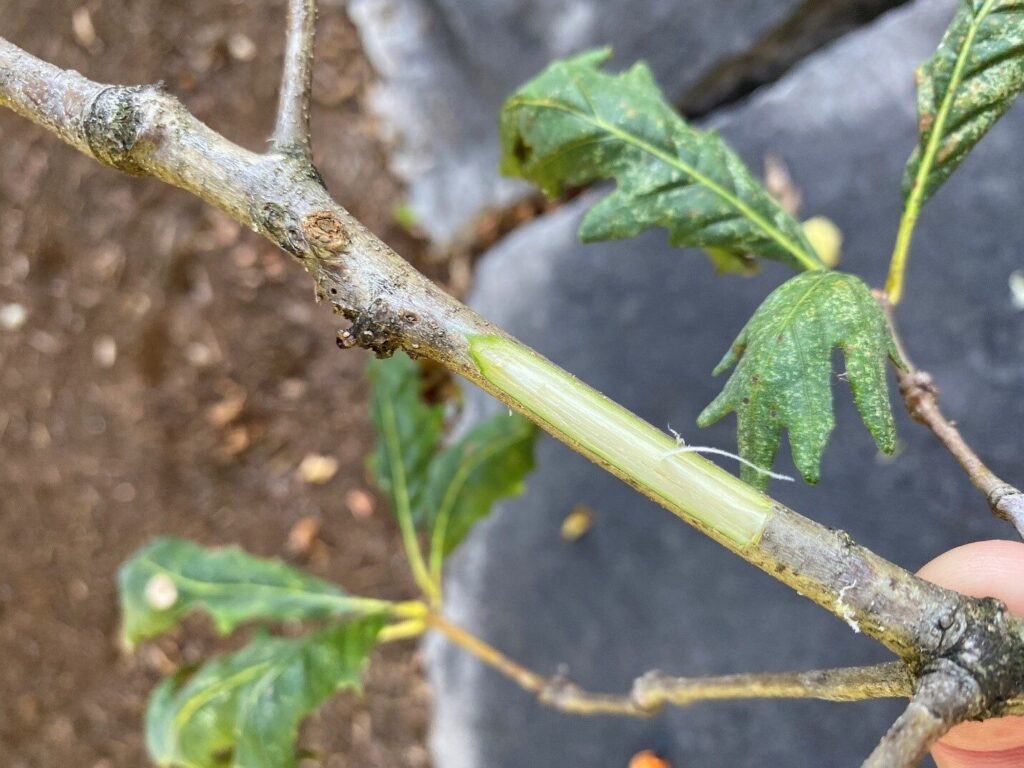
(A lack of vascular streaking can help rule out fungal pathogens such as oak wilt)
Leaf Anthracnose: A Cosmetic Nuisance
The final biological pathogen we explore in this post is leaf anthracnose. Arborists employ this term to describe a range of symptoms in various types of trees, and oaks are not exempt. Symptoms often include leaf cupping and distortion, typically beginning in the lower regions of the tree and moving upward. This pathogen thrives in moist, warm conditions and can be more pronounced in years with wet springs and later during the summer months. While anthracnose is generally not detrimental to tree health, it can be unsightly. Effective control measures include cultural practices such as pruning for improved airflow and proper mulching and fertilizing to enhance plant health and vigor.
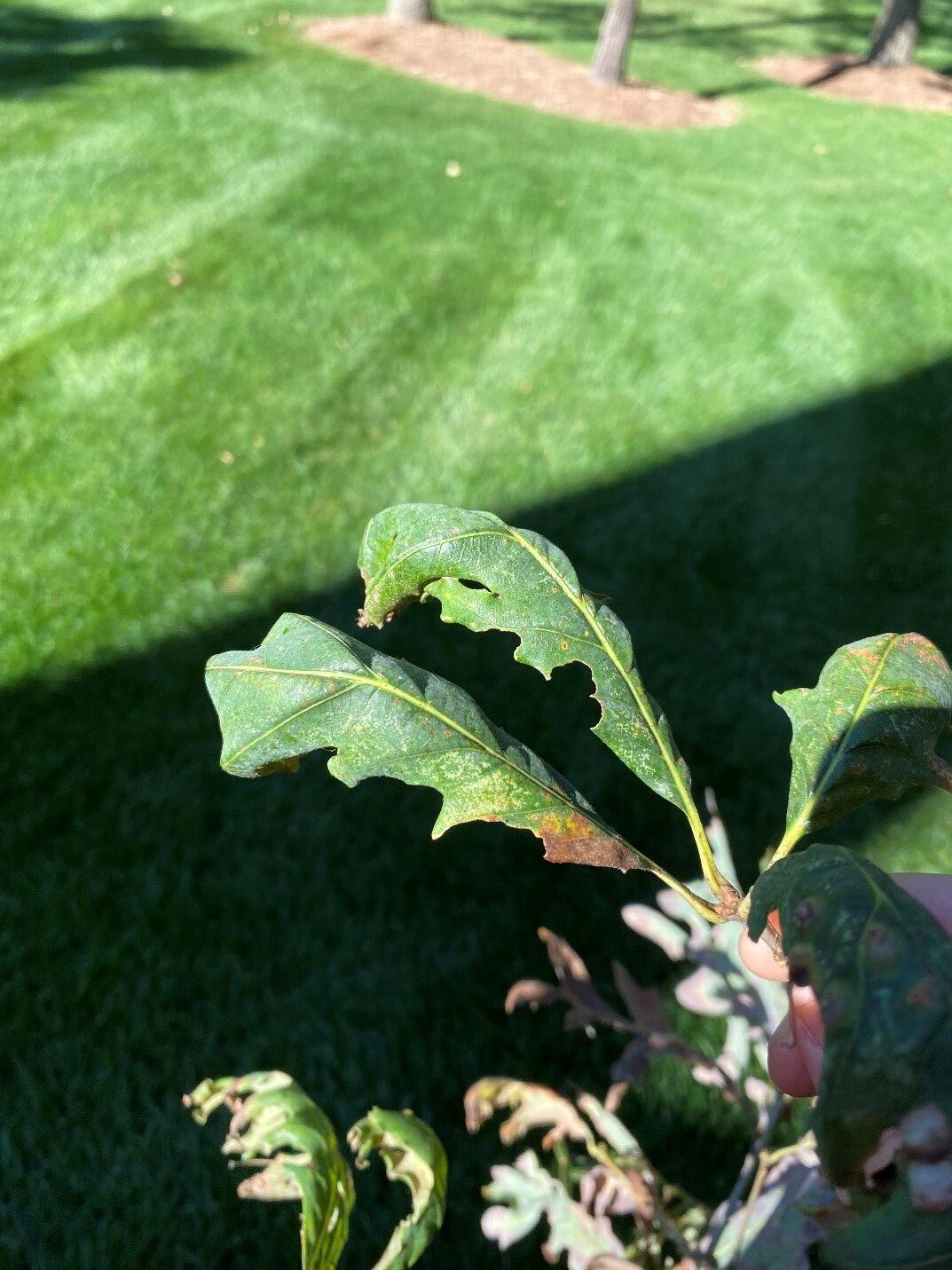
(Leaf distortion and “cupping” may be symptomatic of anthracnose or other environmental factors)
These are some common and important to understand oak foliar diseases in Illinois, but this is not an exhaustive list. If you see odd leaf damage or symptoms on your oak tree, our plant health care team can work with you to manage and mitigate existing infections and help diagnose what may be going on.
The health and vibrancy of your oak trees are vital to the overall beauty and balance of your environment. When faced with the daunting prospect of foliar diseases, it’s best to rely on the expertise and experience of our team at Homer Tree Care. Reach out to us today for an assessment and professional plant health care services. We’re here to ensure the continued well-being of your cherished oak trees.